
Blog · AI & Technology
AI's Next Bottleneck Is Light: Co-Packaged Optics, SerDes and the Domains Built for Them
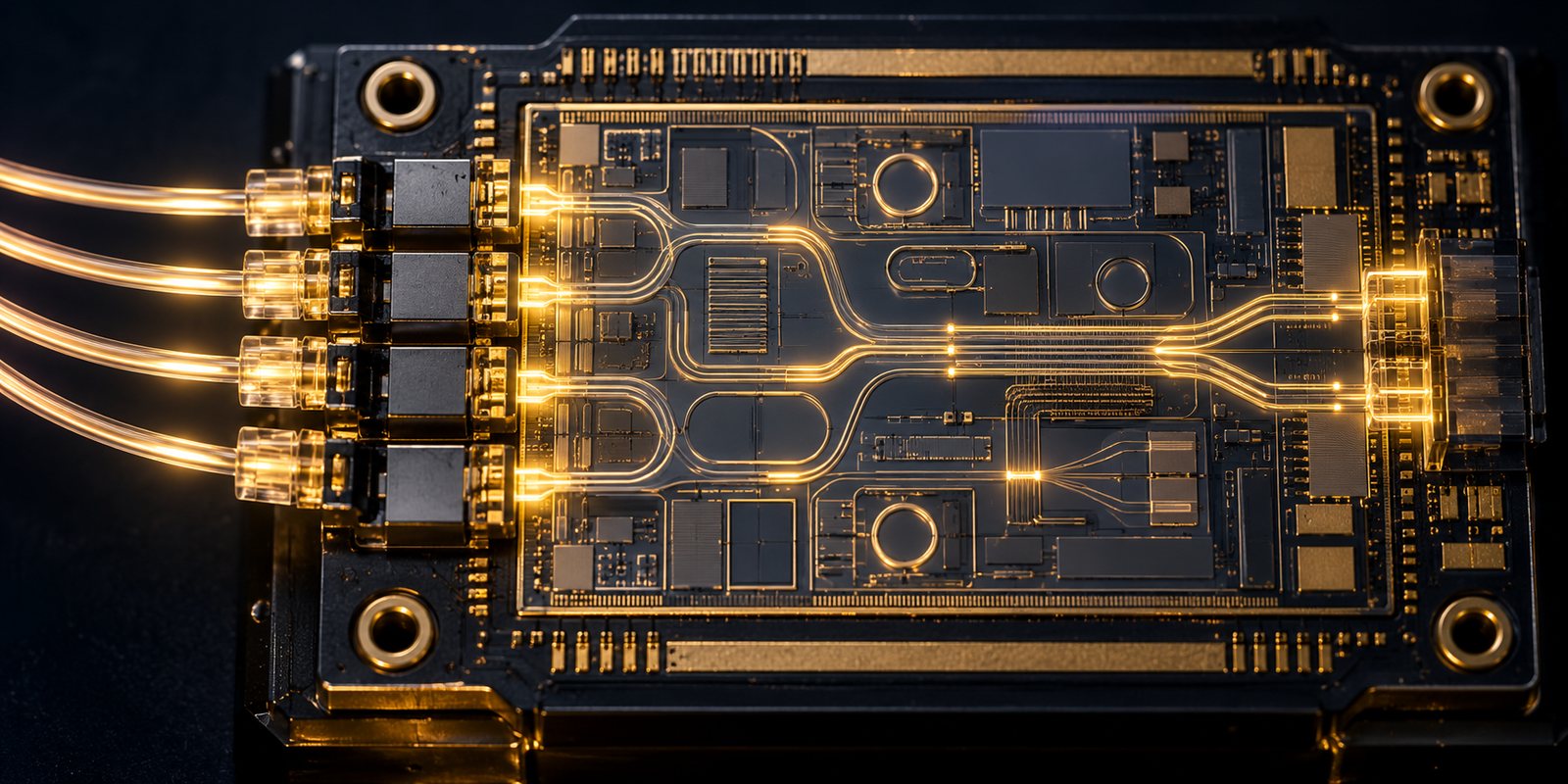
Large AI models run on thousands of chips that have to talk to each other constantly. In 2026 the limit is no longer only how fast those chips compute, but how fast they can move data between them, and more and more of that data now travels as light.
The numbers show how quickly this market is moving. Industry analysts LightCounting estimate that the Ethernet optical transceiver market grew 93% in 2024 and about 82% in 2025, and they forecast another 65% in 2026, driven by AI clusters. This article explains the technologies behind that growth in plain words and introduces seven domain names built on the terms engineers use: CPO, SerDes, backplane, interconnect and photonics.
Figures last checked: October 2026.
1. Why copper is reaching its limits
Inside a data center, chips have traditionally been connected with copper wires and with pluggable optical modules at the edge of each switch. As AI clusters grow, the amount of data moving between GPUs, switches and racks grows with them, and electrical links lose signal and use more power as speeds and distances increase. Moving the conversion to light closer to the chip is one of the main ways the industry is responding.
2. Co-packaged optics is now shipping
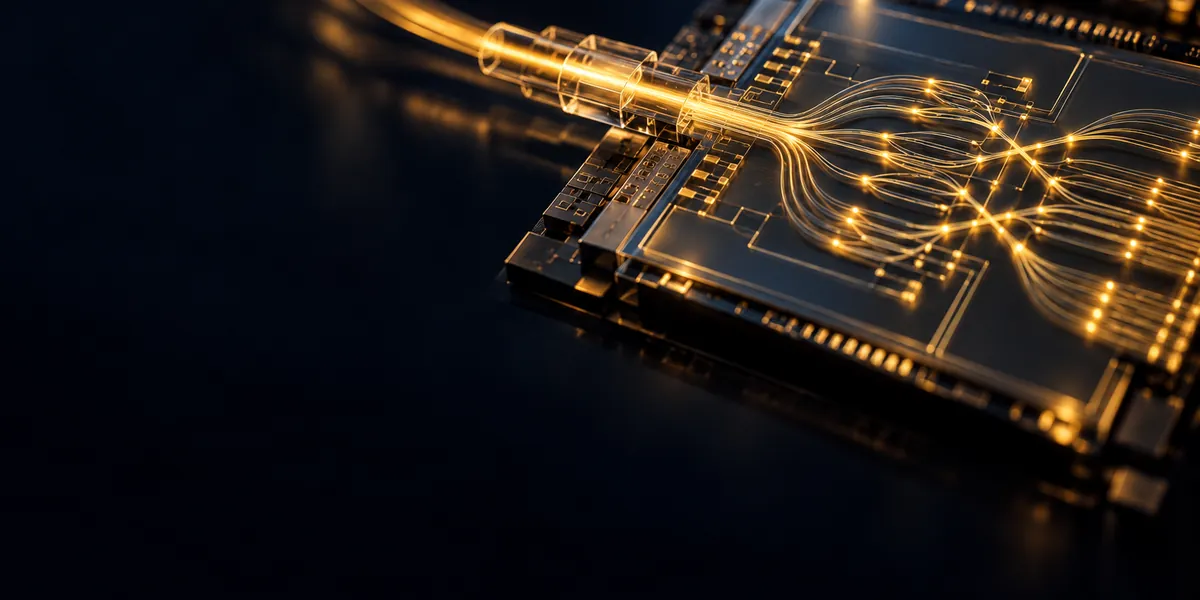
In co-packaged optics (CPO), the optical engine sits in the same package as the switch chip instead of in a separate module at the front of the switch. In June 2026 Nvidia began shipping its Spectrum-X switch with co-packaged optics to selected partners (Focus Taiwan). According to TrendForce, the switch offers up to 400 Tb/s of switching capacity, while Broadcom's 51.2T CPO switch is in limited volume shipments, with Broadcom citing up to 70% lower power than conventional pluggable optics.
TrendForce also names the bottlenecks: optical engine yield, silicon photonics manufacturing capacity and advanced packaging, which CPO switches share with AI chips. It expects the CPO switch market to reach its volume ramp in 2027–2028.
3. Billions are following the light
- Ayar Labs, which develops optical I/O for AI chips, closed a $500 million Series E in March 2026 at a $3.75 billion valuation, bringing its total funding to $870 million (Business Wire).
- Marvell completed its acquisition of optical interconnect developer Celestial AI in February 2026 (Marvell).
- Research firm IDTechEx forecasts that the co-packaged optics market will grow at around 37% a year to more than $20 billion by 2036 (Semiconductor Today).
Alongside these names, many smaller companies are building optical engines, lasers, test equipment and design tools. Each of them needs a name that buyers in this field recognise at once.
4. The terms, in plain words
- CPO (co-packaged optics): optical engines packaged together with the switch or processor chip.
- SerDes: short for serializer/deserializer, the circuit that turns parallel data inside a chip into a fast serial stream for the link, and back again. High-speed chips rely on them.
- Backplane: the board or set of links that connects cards inside a system. Optical backplanes carry those links as light.
- Interconnect: the general word for the links between chips, servers and racks.
- Photonic computing: using light, not only electrons, to process data, an area of active research and start-up activity.
The names
These seven domains use the exact vocabulary of optical interconnect, so an engineer or buyer understands each one without explanation.
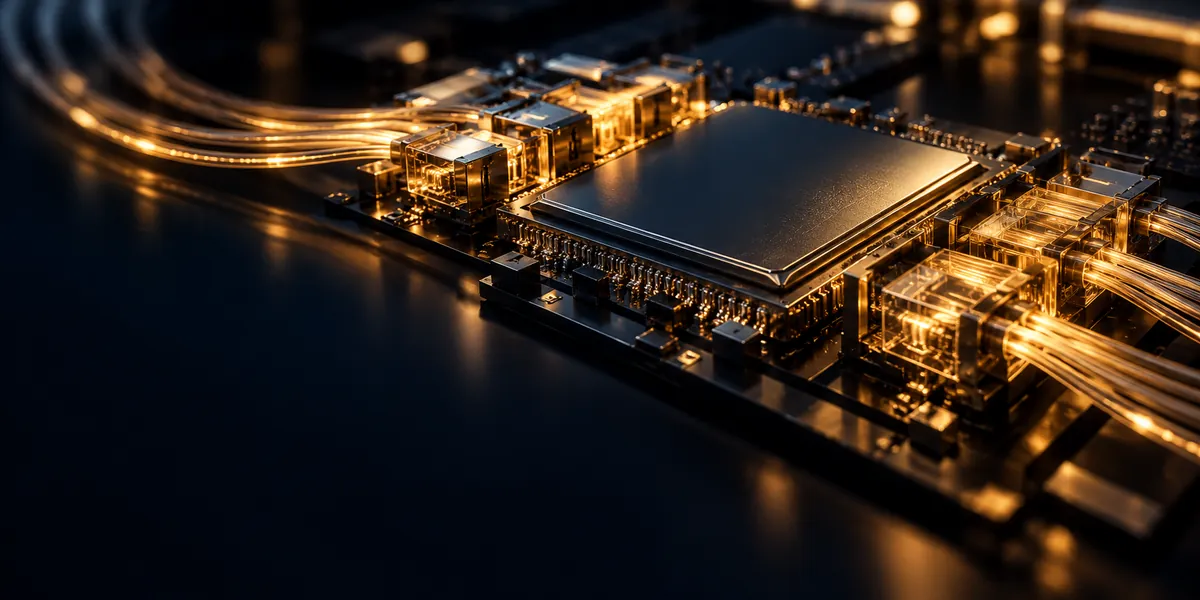
CPOOptics.com
CPO (co-packaged optics): optical engines placed in the same package as a switch or processor chip, so data leaves the chip as light.
OpticalSerDes.com
SerDes (serializer/deserializer): a circuit that converts parallel data into a fast serial stream and back, to move data between chips.

OpticalBackplane.com
Optical backplane: a board that connects cards inside a system using light instead of copper traces.

RackInterconnect.com
Interconnect: the links, cables and switches that carry data between chips, servers and racks.
Serdes.si
SerDes: short for serializer/deserializer, a circuit that moves data between chips over fast serial links.
PhotonCompute.si
Photonic computing: computing that uses light (photons) instead of, or alongside, electrical signals to process data.

PhotonFabric.si
Optical fabric: a network that connects many chips or systems and carries data between them as light.
Who these names are for
- Optical interconnect and silicon photonics start-ups naming a company or a first product.
- Established chip and networking companies launching a separate optics brand.
- IP vendors and design-service firms that license SerDes or photonic building blocks.
- Test, measurement and packaging specialists serving the optical supply chain.
- Media, events and research covering AI networking.
Buy one, or the whole set
Together the seven names cover the optical path of an AI system: the co-packaged engine, the SerDes on the chip, the backplane, the rack and the optical fabric that ties them together. Each name can be bought on its own with Buy Now, or you can make one offer for the whole set using the button below. Direct deals close through Escrow.com, and you will get a personal reply within 24 hours.
Sources
- LightCounting: April 2026 market forecast, demand for optical connectivity
- Focus Taiwan: Nvidia ships TSMC-backed CPO switches (June 2026)
- TrendForce: NVIDIA and Broadcom begin volume ramp of CPO switches (July 2026)
- Business Wire: Ayar Labs closes $500M Series E (March 2026)
- Marvell: Marvell completes acquisition of Celestial AI (February 2026)
- Semiconductor Today: co-packaged optics market to grow at 37% CAGR to $20bn by 2036 (IDTechEx)